
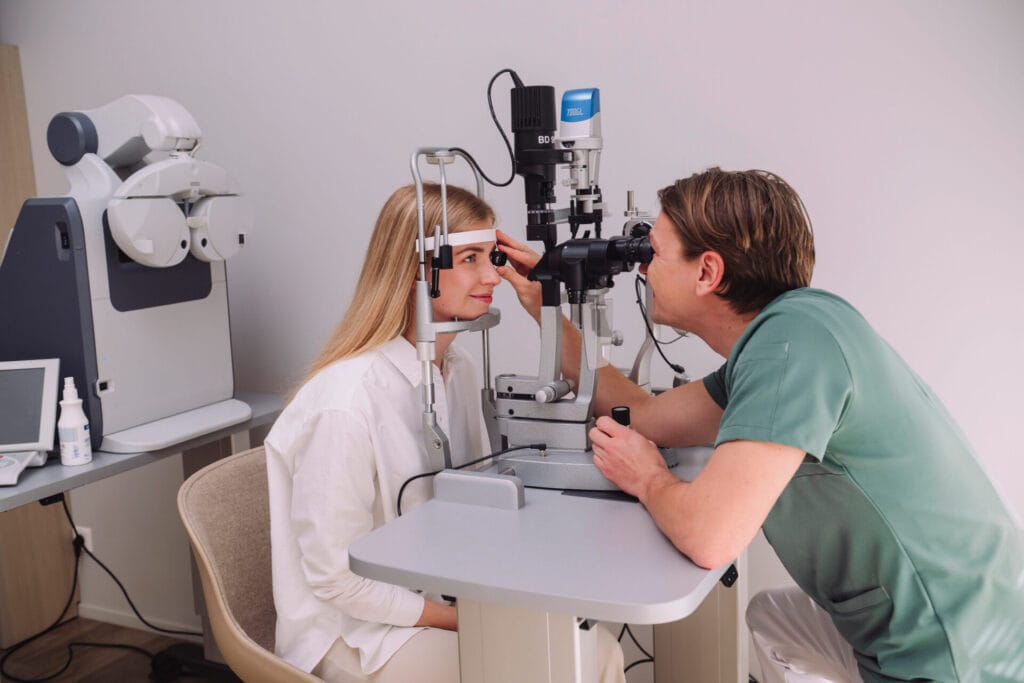
Booking your first private eye examination can feel strangely uncertain. Most people know they may be asked to read letters off a chart but far fewer know what information to bring, what tests may be included or how to make the appointment genuinely useful rather than just routine. That matters because eye problems often develop quietly. The NHS notes that your eyes rarely hurt when something is wrong, while the National Eye Institute says many eye diseases have no symptoms or warning signs in their early stages. On the global side, WHO now estimates that at least 2.2 billion people live with near or distance vision impairment and for at least 1 billion of them the problem could have been prevented or has not yet been addressed.
A first private exam is not just about getting a glasses prescription. Done well, it is a structured health appointment that helps an optometrist understand how you use your vision, spot early disease and decide whether you need simple correction, closer monitoring, or referral for further care. The best way to get value from that appointment is to prepare for it like a health check not like a retail visit.
Why Preparing Properly Makes a Big Difference
Eye examinations are designed to catch more than blurry vision
A comprehensive eye examination is built to pick up far more than short-sightedness or long-sightedness. NHS guidance says optometrists are trained to recognise abnormalities and conditions such as cataracts, glaucoma, and macular degeneration and they may refer patients onward when further investigation is needed. WHO also identifies refractive error cataract, diabetic retinopathy, glaucoma and age related macular degeneration as major causes of vision impairment worldwide.
That is why preparation matters. If you show up with only a vague idea that your eyes feel off your optometrist has less to work with. But if you arrive knowing when symptoms started, whether they affect reading or night driving, and what health conditions run in your family, the appointment becomes much more clinically useful. The College of Optometrists’ guidance makes clear that history taking is a core part of the exam, including symptoms, general health, medication, family history, driving status, occupation, recreation and previous prescription details.
Private appointments can be more tailored, but you should know what is included
One overlooked advantage of private eye care is clarity and flexibility. The College of Optometrists says practitioners should make it clear whether an exam is being carried out privately or under the NHS and should agree payment for any private services in advance. For patients, that means it is sensible to check before the appointment whether the quoted fee covers only the core sight test or also includes additional imaging, follow-up advice, or contact lens assessment.
That small step can prevent the most common first time frustration: assuming every test is included, then feeling rushed into decisions on the day.
What Usually Happens During a First Private Eye Examination
The appointment starts with your history not the eye chart
A good first exam usually begins with questions. Your optometrist is likely to ask why you booked the appointment, what symptoms you have noticed, how long they have been happening, whether you take any medication, whether you have general health conditions, and whether relatives have had eye disease. They may also ask about work, screen use, hobbies, and whether you drive.
This is not box-ticking. A 2025 systematic review and dose-response meta-analysis in JAMA Network Open, covering 45 studies and 335,524 participants, found that each additional hour of daily digital screen time was associated with 21% higher odds of myopia, with the risk rising sharply between 1 and 4 hours per day. That makes lifestyle questions highly relevant, especially for younger adults, students, and office workers spending long hours on screens.
For example, someone who says, “I’m fine except I get headaches at 4 p.m. after laptop work,” is giving clinically useful information. So is the driver who reports increased glare at night, or the contact lens wearer who gets dryness by evening.
The tests are broader than most first-time patients expect
The clinical part of the exam may include visual acuity testing, refraction, eye muscle balance, pupil assessment, internal and external eye examination, and sometimes imaging or pressure checks depending on your risk profile and symptoms. The National Eye Institute describes common components such as visual acuity, visual field, eye muscle function, pupil response, tonometry, and dilation when needed to assess the inside of the eye. The College of Optometrists’ professional guidance similarly lists refraction, ocular motility, pupil reactions, internal eye examination, imaging, intraocular pressure where appropriate, and visual fields for patients at risk.
So if your appointment feels more detailed than “read the letters, here’s your prescription,” that is often a sign the clinician is doing a proper job.
Some people may need extra attention because of risk factors
If you are older, have diabetes, have high blood pressure, have significant short-sightedness, or have a family history of glaucoma, your optometrist may want a closer look. NHS guidance lists glaucoma risk factors including being over 50, having a parent, sibling, or child with glaucoma, being from Black African, Caribbean, or Asian backgrounds, and having other conditions such as diabetes or significant refractive error. The National Eye Institute also recommends regular dilated exams for some higher-risk groups, including adults over 60 and people with a family history of glaucoma.
That is why a first private exam is not the place to downplay your family history or skip over your medication list.
How to Prepare in the Week Before Your Appointment
The most effective preparation is simple and practical:
- Gather your current glasses, sunglasses, and contact lens details. Your previous prescription, current correction, and contact lens routine help the optometrist compare how your eyes are functioning now versus before.
- Write down symptoms clearly. Note when they started, whether they are constant or occasional, and whether they affect screens, reading, night driving, headaches, glare, dryness, or double vision. The College of Optometrists specifically expects symptoms, description, and duration to be recorded.
- Make a medication and health list. Include general health conditions, eye drops, migraine treatment, diabetes medication, blood pressure treatment and anything else relevant. These details are part of standard history taking.
- Ask relatives about family eye history. Glaucoma, macular degeneration, retinal problems, and early cataracts are worth mentioning, especially if the diagnosis was in a parent or sibling.
- Think about your visual tasks. Do you work at two monitors all day, drive long distances, do detailed craft work or switch often between phone and desktop? The exam is more useful when the prescription is tied to real-life visual demands.
- Confirm the fee and inclusions beforehand. Because private services should be agreed in advance it is reasonable to ask what the exam covers and whether any optional tests carry extra charges.
What to Do on the Day of the Examination
Bring the right things and plan for flexibility
On the day itself, bring your current glasses, any contact lens information and a short note of symptoms or questions. If there is any chance your pupils may be dilated, bring sunglasses and avoid scheduling anything that absolutely depends on sharp near vision or comfortable driving immediately afterward. The College of Optometrists advises warning patients that they might not be able to drive after dilation and suggests bringing sunglasses the National Eye Institute says vision may be blurry and light sensitivity may increase for a few hours after a dilated exam.
This is especially important if your first private exam is booked during a workday. Reading spreadsheets, driving home in bright sunlight or returning straight to screen heavy work may be more difficult than you expect if dilation is used.
Be honest rather than trying to perform well
Many first-time patients treat an eye exam like a test they are supposed to pass. That is the wrong mindset. If letters look equally blurry, say so. If you only struggle at night, mention that. If your eyes feel dry only after contact lens wear or after six hours at a screen, say that too. Accurate detail helps the clinician interpret the results properly, and modern eye care increasingly depends on matching findings to lifestyle and symptoms rather than chasing a prescription number alone.
Questions Worth Asking During Your First Private Eye Exam
A strong appointment is a two-way conversation. Useful questions include:
- Has my prescription changed and by how much?
- Is there any sign of an eye health issue beyond vision correction?
- Do you recommend dilation or any additional imaging in my case, and why?
- How do my screen habits, driving or work setup affect what you are seeing?
- Should I return in two years, or sooner because of my risk factors or symptoms?
- What warning signs should make me book earlier than planned?
These questions move the appointment from transactional to genuinely informative.
What Happens After the Examination
You should leave with clarity, not pressure
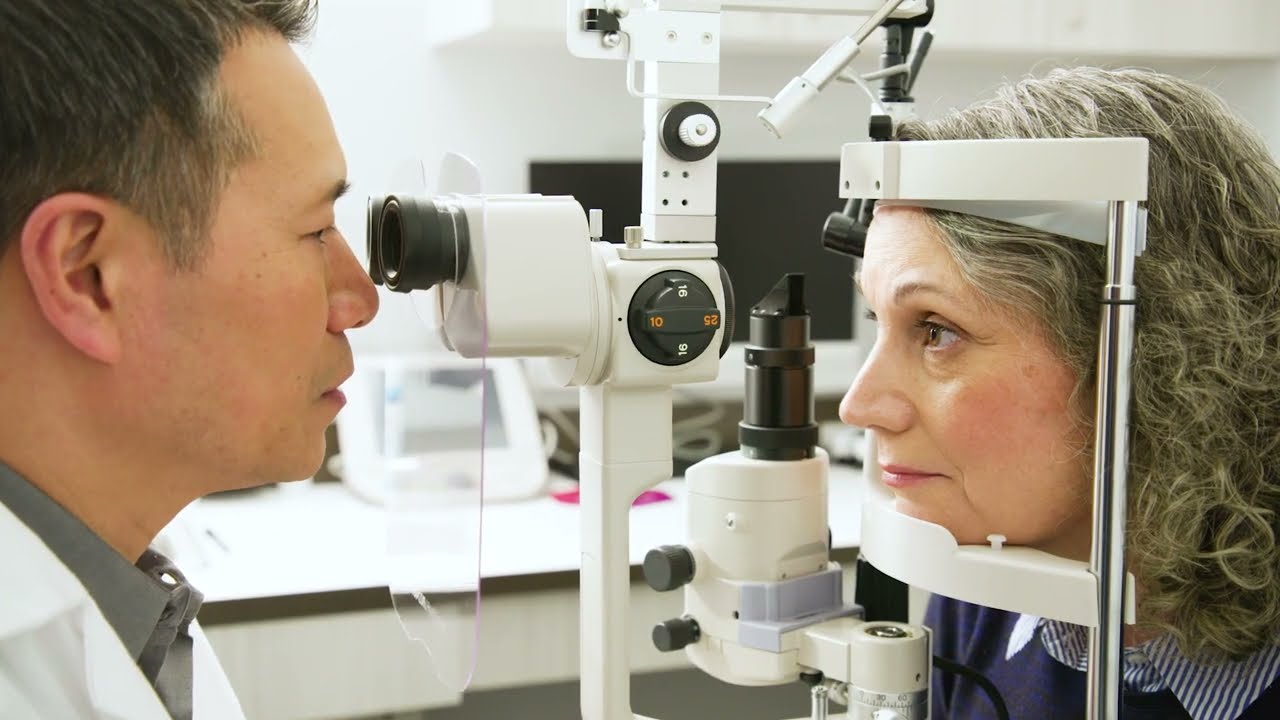
After an eye test, the NHS says the practitioner is legally required to give you your optical prescription or a statement explaining that you have been referred for further tests. It also states that you should never feel obliged to buy glasses from the same place where you had your eye test. That point is especially valuable in private care, where retail and clinical services often sit side by side.
So after your first private exam, you should know one of three things clearly: your prescription has changed and you want correction, your eye health is stable and you should return on a routine timetable, or something needs monitoring or referral. If none of that is clear, ask before you leave.
The real value is in the follow-through
The biggest mistake after a first exam is assuming the visit is done once the glasses decision is made. In reality the useful output may be the advice itself: screen breaks dry eye management, updated working distances, lens recommendations for driving or VDU use or a shorter recall interval because of glaucoma risk or another concern. The College of Optometrists guidance specifically includes recording advice given, management changes, referrals and recall dates.
Conclusion
Preparing for your first private eye examination is less about paperwork and more about context. The more clearly you can explain your symptoms, health history, family background, and everyday visual demands the more precise and useful the appointment becomes. That matters because eye examinations are not only for blurry vision. They are one of the few routine checks that can uncover silent problems early, often before you notice anything is wrong.
Looking ahead, that preparation is becoming even more important. Global vision needs are rising, screen exposure is reshaping how people use their eyes, and risk factors such as age, diabetes, and family history are becoming more relevant to everyday clinical decisions. A first private eye exam, then, should not be treated as a minor errand. It is a practical investment in long-term visual health, and a well-prepared patient almost always gets a better outcome from it.
FAQs
What is a private eye examination?
A private eye examination is a paid eye test that checks your vision, eye health, and whether you need glasses, lenses or further care.
How long does a first private eye exam usually take?
Most first appointments take around 20 to 40 minutes, depending on your symptoms and the tests included.
What should I bring to my first eye appointment?
Bring your current glasses, contact lens details, medication list, and notes about any symptoms or family eye history.
Should I wear my glasses to the exam?
Yes, always bring and wear your current glasses so the optometrist can compare your existing prescription with your current vision.
Can I wear contact lenses before the appointment?
Yes, but tell the optometrist you wear them, as they may advise you to remove them for some tests.
Will the eye examination be painful?
No, a routine eye examination is usually painless, though some tests may feel slightly unusual or make your eyes sensitive for a short time.
What symptoms should I mention during the exam?
Mention blurry vision, headaches, glare, dry eyes, eye strain, double vision, or trouble seeing at night.
Do private eye exams check for eye diseases too?
Yes, they can help detect early signs of problems such as glaucoma, cataracts, and macular degeneration.
Can I drive after a private eye exam?
Usually yes, but if your pupils are dilated, your vision may be blurry for a few hours, so driving may not be advisable.
How often should I have an eye examination?
Most adults are advised to have an eye test every two years, but some people may need more frequent checks.