
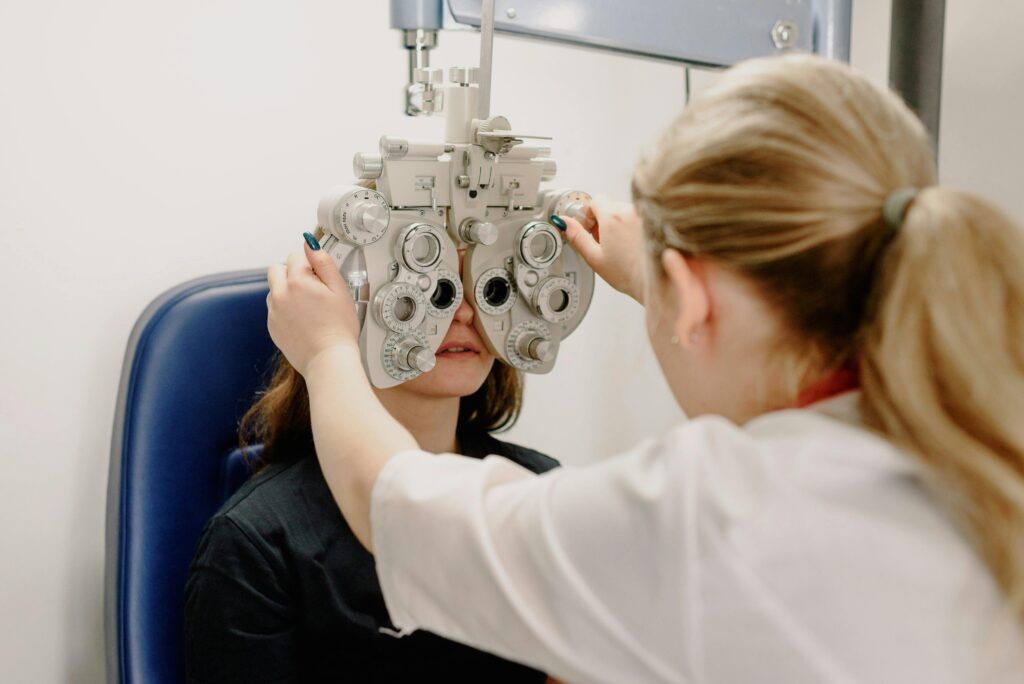
If you live in Derby regular eye checks keep your vision sharp and eye health on track. This guide explains how often you should visit an optician in Derby, compares NHS and private options and shows you what factors change the schedule.
Whether you’re new to eye care or updating an existing routine, knowing when to book helps you stay ahead of problems. The plan below balances NHS access with the convenience of private care so you can tailor visits to your needs.
TL;DR Key Takeaways
- Most adults in the UK have eye exams every two years; some groups need more frequent checks.
- NHS eye tests are available to eligible individuals private tests can fill gaps when earlier monitoring is advised.
- In Derby, you can book NHS or private eye tests at local opticians, including Optique Derby at Intu Derby, with aftercare and OCT services.
- Children, contact lens wearers, diabetics, drivers and older adults have specific guidance on test frequency.
- Look for urgent symptoms that warrant earlier testing and know where to book in Derby city centre.
1-sentence topic definition
An eye examination is a comprehensive assessment of vision and eye health conducted by a qualified optometrist, aiming to detect refractive errors, monitor eye health, and identify potential systemic conditions through the eyes.
Insight: Regular tests help catch problems before they affect everyday life.
Examples include checking for myopia, glaucoma signs, or early retinal changes linked to diabetes.
Tip: Schedule aligned with your last prescription date to maintain consistency.
Step by step overview (for quick planning)
Plan your visits with a simple five-step path. Start with current guidelines, then tailor the cadence to risk factors and local Derby options.
- Step 1: Understand the standard NHS timeframe and when private monitoring is useful.
- Step 2: Identify your risk group (age, medical history, contact lens use, diabetes, drivers).
- Step 3: Choose a Derby optician with NHS/private options and aftercare services.
- Step 4: Schedule and prepare for your appointment (bring prescription, meds, last test date).
- Step 5: After the test, review results and plan the next visit.
How often should adults in the UK visit an optician? (Derby context)
General guideline: NHS-recommended sight tests every two years for adults without risk factors are common. In Derby, opticians such as Optique Derby offer both NHS and private tests, making scheduling flexible.
More frequent visits may be advised if you notice symptoms or have risk factors like diabetes or a family history. NHS tests are free for eligible groups, while private tests can provide earlier monitoring or extra services such as aftercare and OCT imaging.
NHS vs Private eye care in Derby
NHS eye tests follow a standard interval for many adults; eligibility depends on conditions and risk. Private tests are appropriate when more frequent monitoring or comprehensive care is needed, or if you don’t qualify for NHS testing.
In Derby, practices including Optique Derby provide both options. Check what’s included OCT imaging, aftercare frame fittings and compare costs before booking.
Frequency by group and risk factors
Audiences vary by age and risk, so your cadence should adjust. Adults 25–60 typically test every two years unless risk factors exist. Seniors 60+ may need annual checks or more, due to cataracts, glaucoma, or macular changes.
Children 7–15 often require closer monitoring if there are binocular vision concerns. Contact lens wearers may need regular checks and frequent aftercare. People with diabetes usually have annual eye health checks plus diabetic retinopathy screening.
Drivers benefit from routine checks to support road safety. If you have a family history of eye disease, your optometrist may suggest earlier or more frequent visits.
What happens during a Derby eye test? (What you can expect)
Every test starts with a plan for your vision and eye health. You receive a vision assessment, an internal eye health check, possibly OCT imaging, and a pressure check where appropriate.
Doctors review medical history and systemic conditions, such as diabetes or hypertension, that affect eyes. Your prescription may be updated for glasses or contact lenses and you’ll set the next appointment with aftercare directions.
What eye conditions can be detected during routine exams?
Routine exams can spot refractive errors, early glaucoma signs, diabetic retinopathy, cataracts, and macular changes. They also reveal binocular vision issues and signs of systemic health through the eye.
Early detection improves treatment options and outcomes. When in doubt, your optometrist can guide next steps, including referrals if needed.
Warning signs: when to book earlier (urgent symptoms)
Urgent booking is wise if you notice any sudden vision loss, a curtain-like shadow, severe eye pain, redness, or light sensitivity. New floaters, flashes, or distorted vision deserve prompt checks.
Discomfort, discharge, or a suspected eye infection also warrants quick assessment. If you’re worried, don’t delay seek same day slots where available in Derby.
Derby-specific considerations
For Derby city centre testing, houses a central option with Optique Derby. Urgent or same-day appointments may be available; check with the clinic. Evening or weekend slots vary by practice, so book ahead.
Local clinics offer NHS and private routes, and many provide aftercare and fittings. If you’re looking for a reliable Derby hub, Optique Derby is a strong choice in the city center.
Real-life use cases (Derby-friendly scenarios)
Working professionals in Derby on screens may opt for a two-year schedule but book earlier if digital eyestrain emerges. A family with kids often starts with a comprehensive exam before school and follows findings with tailored follow-ups.
A senior with diabetes typically combines an annual optometrist visit with diabetic retinopathy screening for integrated care. These examples show how to adapt cadence to daily life in Derby.
Quick-reference schedule by profile (printable guide)
- Profile A: Adult, no risk factors every 2 years
- Profile B: Adult with diabetes or family history yearly or as advised
- Profile C: Child or teen with binocular vision concerns 6–12 month intervals as advised
- Profile D: Contact lens wearer routine test every 1–2 years plus regular aftercare visits
Real world actions for Derby readers
How to choose: Prioritize Derby practices offering NHS and private options, convenient hours, and aftercare services. How to book: Use online booking or call Optique Derby (Intu Derby) to confirm current services and hours.
How to prepare: Bring your last prescription, list medications and notes about vision changes or symptoms. Consider keeping a simple eye health diary to track changes.
Conclusion and next steps
Regular eye examinations are key to preserving vision and spotting issues early. If you’re in Derby, you have strong NHS and private options; plan by age, risk, and schedule. Take action today and book your eye test with Optique Derby or your preferred Derby optician.
Summary
In Derby, eye care follows national guidance with local flexibility. Use a risk-based schedule, choose NHS or private testing, and stay ahead with timely checks. Your eyes deserve regular attention, and Derby offers strong options to keep them healthy.
Smart scheduling helps you balance cost, access and care. For Derby residents, start with Optique Derby and confirm current NHS eligibility and services.
FAQ
How often should I have an eye test in Derby?
Standard guidance is every two years for adults with more frequent checks if risk factors apply.
Can I get a free NHS eye test in Derby?
NHS tests are available to eligible individuals private options exist for additional care or earlier monitoring.
Do children need more frequent eye tests in Derby?
Some pediatric cases require follow-ups every 6–12 months; discuss with your Derby optician.
What can opticians detect during a routine eye test?
Refractive errors eye health issues and early signs of systemic conditions, often with imaging.
Where can I book an eye test in Derby?
Optique Derby at Intu Derby is a central option other local opticians provide NHS/private tests check hours and booking.