
Eyewear sits in a rare category: it is both medical necessity and personal signature. That matters because vision problems are not niche. The World Health Organization says at least 2.2 billion people worldwide live with near or distance vision impairment and in at least 1 billion cases the problem could have been prevented or is still unaddressed. WHO also estimates the annual global productivity loss tied to vision impairment at about US$411 billion. At the same time, the business of eyewear keeps expanding: Grand View Research values the global eyewear market at US$200.46 billion in 2024 and projects US$221.89 billion in 2025, with continued growth through 2030. In other words, glasses are no longer just a corrective tool or a fashion extra. They are a daily use product where quality, comfort and longevity matter more than ever.
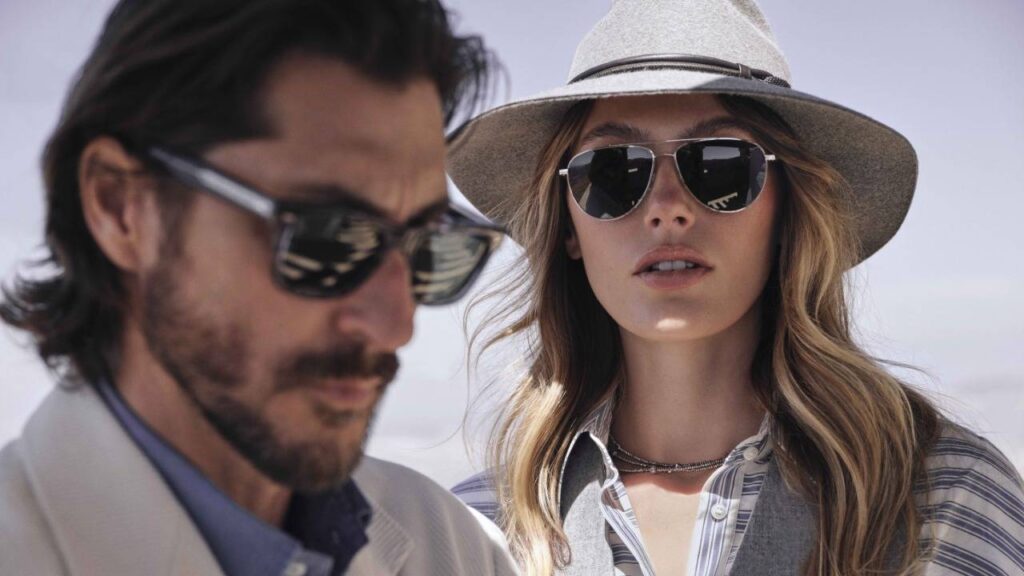
That is exactly why Oliver Peoples has kept its relevance. In a market crowded with loud logos and fast trend frames the brand has built its reputation around something harder to fake: restrained design, strong materials and a sense of permanence. The official brand site still frames Oliver Peoples through timeless elegance and precise craftsmanship and its current collections continue to lean into those values rather than chasing novelty for novelty’s sake.
Why timeless luxury matters more in eyewear than in most accessories
A bag can stay in the closet for weeks. Eyewear cannot. If you wear prescription frames, sunglasses, or both the product touches your face for hours at a time, affects your posture and eye comfort, and becomes part of how people recognize you. That is one reason premium eyewear has remained resilient even while the wider luxury market has slowed. Bain reports that the personal luxury goods market was broadly stable in 2025 but eyewear still expanded by an estimated 2% to 4% at current exchange rates, reaching about €17 billion. Bain also notes that eyewear has benefited from design-led differentiation, versatility and its role as an accessible entry point into luxury.
That last point is important. Luxury eyewear is easier to justify than many other luxury purchases because it delivers visible design value and functional value at the same time. Grand View Research says prescription glasses accounted for more than 69% of global eyewear revenue in 2024 which shows how much of the market is still driven by real visual need not impulse buying alone. When buyers choose a premium frame, they are often paying for something they will use almost every day not just on special occasions.
What makes Oliver Peoples feel different
A Los Angeles heritage that never depended on flashy branding
Oliver Peoples traces its roots to 1987 in West Hollywood. The brand’s own boutique storytelling says the first store opened in the heart of West Hollywood in 1987 while other official Oliver Peoples pages tie the brand’s launch to Sunset Boulevard and the cultural mix of Los Angeles. That origin story still matters because it explains the label’s aesthetic language: cinematic, vintage-aware, and polished, but rarely loud.
Unlike many luxury labels that use eyewear mainly as a logo vehicle, Oliver Peoples has long sold understatement as the product. Its current Gregory Peck, Cary Grant and Paul Newman collections all lean on terms like timeless style, refined aesthetics, precision craftsmanship and understated sophistication. That consistency is a big reason the brand reads as timeless rather than merely retro. It borrows from classic Hollywood, but it edits those references into wearable, modern frames.
Japanese craftsmanship gives the brand a technical backbone
Luxury in eyewear has to be felt, not just seen. Oliver Peoples repeatedly connects its identity to Japanese eyewear craft. The brand says it has had a relationship with Japanese eyewear since its inception in 1987 and notes that its Japan-made styles are crafted at a Fukui factory. Its Titanium Collection is described as handcrafted in Japan and positioned around durability, lightweight comfort and precision engineering.
That matters because the real luxury test in glasses is cumulative comfort. Lightweight frames reduce fatigue across long days. Better construction improves balance on the nose and ears. Durable materials age more gracefully. When a brand can pair understated design with material discipline the result is not just a beautiful frame on day one it is a frame that still feels right after months of commuting, screen work, travel and daily cleaning. Oliver Peoples’ emphasis on titanium, acetate and careful detailing makes more sense when viewed through that practical lens.
Why premium eyewear buyers are still trading up in 2025
The Vision Council’s Q4 2024 consumer research gives a useful snapshot of how people buy eyewear now. The report found that while lower cost non prescription eyewear still dominates, the number of consumers purchasing new prescription eyewear costing US$200 or more was slightly increasing, especially online. It also found that 86% of eyeglass purchases still happened in person and among people who had an eye exam in the last three months and bought prescription eyewear 78% purchased from their exam provider.
Those numbers explain why brands like Oliver Peoples continue to hold their place. Premium eyewear tends to perform best when the buyer can compare fit, lens options and finish quality in person. Even in a digitally mature market, people still want to feel the hinge tension, test the bridge fit, and see how the frame sits under real light. Luxury eyewear is not only about status it is often about reducing purchase regret on a product that will live on your face.
What buyers are really paying for
- Material performance: Japan-made titanium and premium acetate matter because they affect weight, durability and how refined the frame feels over time.
- Design longevity: Oliver Peoples consistently builds around classic silhouettes and understated refinement, which lowers the risk that a frame will feel dated after one season.
- Wearability: Timeless luxury works when a frame moves between office, travel, formal settings, and casual use without looking out of place. Bain specifically points to versatility as one of the reasons eyewear kept momentum in 2025.
- Ownership confidence: Oliver Peoples’ site highlights free returns on eligible online purchases and a two-year warranty against defects in materials and workmanship, which adds a practical layer to the premium price.
How to choose the right Oliver Peoples frame for your lifestyle
A smart Oliver Peoples purchase starts with your use case, not the logo on the temple. If the frame will carry prescription lenses and stay on all day, comfort and weight should outrank trend appeal. If it is mainly sunwear, silhouette and lens personality can take a larger role. The brand’s collections make that easier because they are organized around distinct visual identities rather than endless lookalike releases.
Here is a practical way to think about the lineup:
- Titanium Collection: best for buyers who want lighter weight, durability, and an everyday frame that disappears into the routine in the best way.
- Gregory Peck Collection: a strong choice for someone who likes classic, intellectual, Old Hollywood energy without excessive ornament.
- Cary Grant Collection: suited to buyers who want polish and a slightly more sculpted, refined vintage mood with a modern touch.
- Paul Newman Collection: ideal for people drawn to a classic pilot shape with more character and exclusivity.
- KHAITE Collection: the right lane for shoppers who want Oliver Peoples craftsmanship with a more fashion-forward, contemporary edge.
The deeper lesson is that timeless luxury is not the same as playing it safe. The best Oliver Peoples frames still have personality. They just express it through proportion, finish and cultural reference instead of overt branding.
How to buy luxury eyewear without overpaying for the wrong frame
The easiest mistake in premium eyewear is buying with only aesthetics in mind. A beautiful frame that slips, pinches, or feels too heavy stops feeling luxurious very quickly. The better approach is to use a short decision filter:
- Start with wear time: will this be a 10-hour daily frame or an occasional statement pair?
- Choose material based on routine: titanium for lighter all-day wear, acetate when you want more visual presence.
- Prioritize fit and lens planning before color. The Vision Council data showing continued in-person dominance is a reminder that fit still wins.
- Think in terms of five-year style, not one-season excitement. Oliver Peoples is strongest when bought as a long-horizon piece.
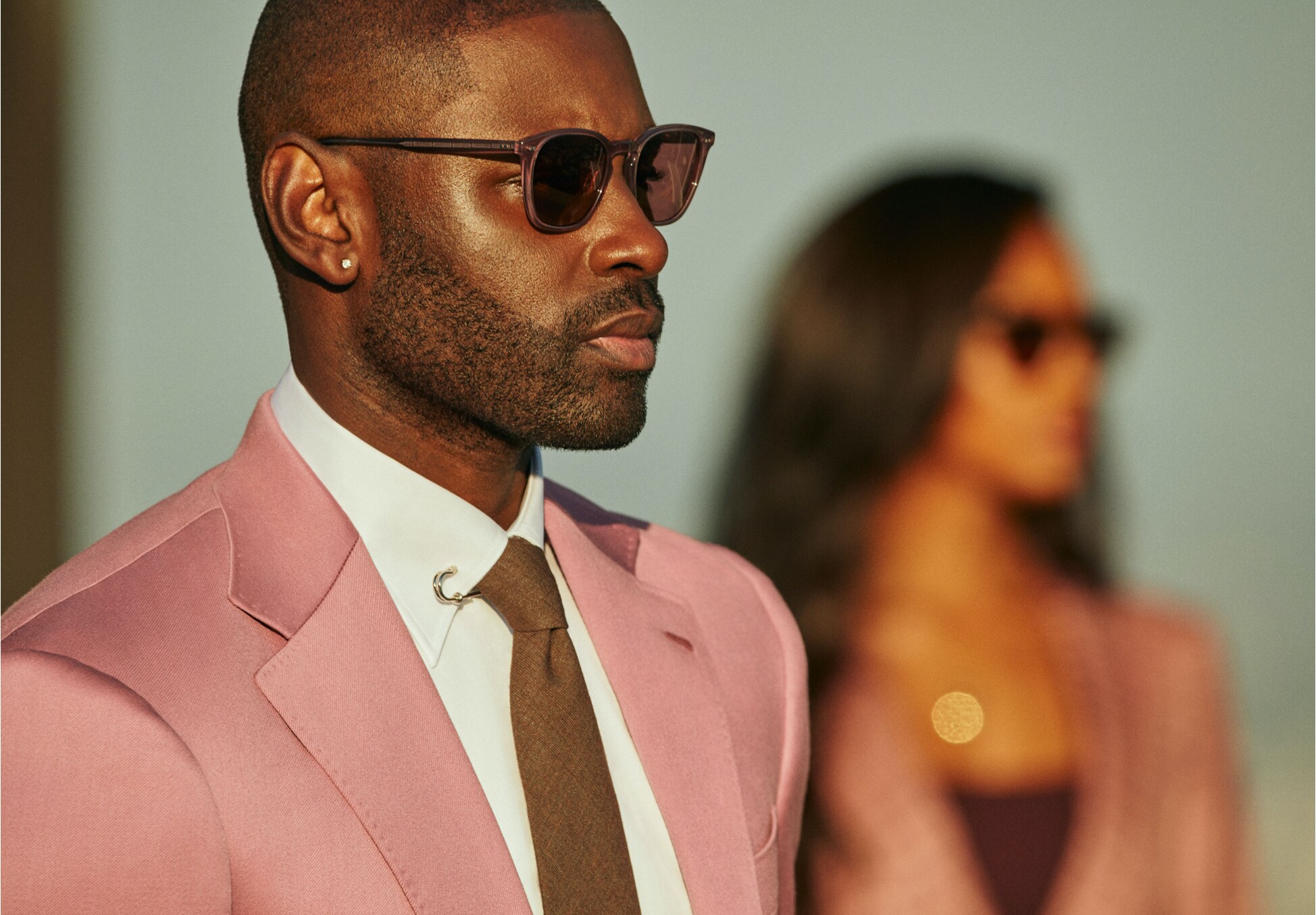
This is also where Oliver Peoples benefits from its quiet design language. Frames that are not over-designed tend to work with more wardrobes, more age brackets, and more contexts. That versatility lowers the real cost per wear.
Oliver Peoples in the 2026 luxury landscape
The interesting thing about Oliver Peoples is that it has stayed culturally current without abandoning its core identity. The brand’s site is already foregrounding Spring 2026, and its collaboration engine remains selective rather than scattershot. In 2025, EssilorLuxottica renewed the Roger Federer x Oliver Peoples partnership through the end of 2027. In 2026, Oliver Peoples also launched a Paul Newman collection that extends its long-running interest in iconic personalities and enduring style codes.
That strategy fits the broader market. Bain says online luxury stabilized at about 21% share in 2025, while secondhand luxury grew to an estimated €50 billion. Consumers are more selective, more value-conscious, and more interested in products that hold emotional and aesthetic relevance. A brand like Oliver Peoples is well positioned in that environment because it is not trying to win with noise. It is trying to win with lasting taste.
Conclusion
Oliver Peoples earns its luxury status the right way: through consistency, materials, comfort and design restraint. That is why the brand still stands out in a market where eyewear is growing, consumers are becoming more selective, and luxury buyers increasingly want products that justify their place in everyday life. The bigger trend from 2024 to 2026 is clear: eyewear is becoming an even more important category because it sits at the intersection of health, identity, and daily utility. Brands that can deliver timeless style with real-world wearability will keep winning. Oliver Peoples is one of the clearest examples of that formula working exactly as intended.
FAQs
What makes Oliver Peoples eyewear different from other luxury brands?
Oliver Peoples is known for understated design, premium materials, and timeless styling instead of bold logos.
Is Oliver Peoples considered a luxury eyewear brand?
Yes, it is widely recognized as a premium luxury eyewear brand with a strong focus on craftsmanship and design quality.
Are Oliver Peoples frames good for everyday wear?
Yes, many styles are designed for daily comfort, especially lightweight titanium and well balanced acetate frames.
Why is timeless eyewear a smart investment?
Timeless frames stay stylish longer, work with more outfits, and offer better long-term value.
Does Oliver Peoples offer both eyeglasses and sunglasses?
Yes, the brand offers both prescription-ready eyeglasses and luxury sunglasses.
What materials are commonly used in Oliver Peoples eyewear?
The brand often uses high-quality acetate, titanium and carefully crafted metal components.
Are Oliver Peoples glasses comfortable for long hours?
Many wearers choose them for all-day use because of their refined fit, lightweight construction, and balanced design.
Who should buy Oliver Peoples eyewear?
It is ideal for people who want luxury eyewear with subtle style, lasting quality, and everyday versatility.
Can Oliver Peoples frames work with prescription lenses?
Yes, many Oliver Peoples eyeglass frames can be fitted with prescription lenses.
Why is Oliver Peoples still popular today?
Its mix of classic design, modern craftsmanship and quiet luxury keeps it relevant year after year.